
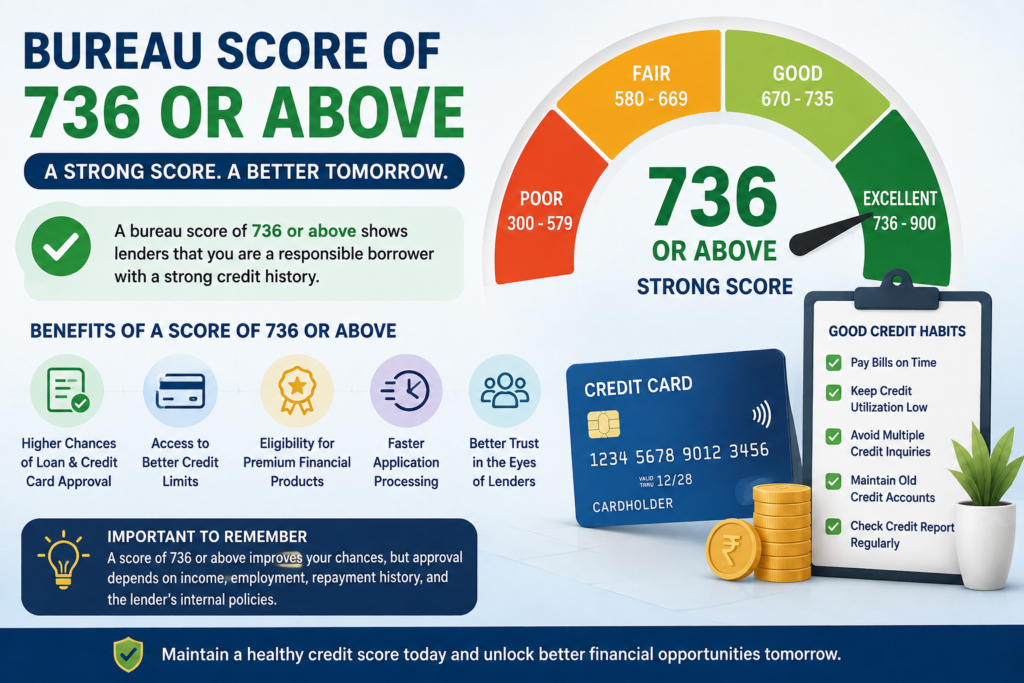
A bureau score of 736 or above is generally considered a strong indicator of responsible credit management. Credit card issuers and financial institutions often review an applicant’s credit history to assess their repayment behavior and overall creditworthiness. While a high bureau score does not guarantee approval, it can improve the chances of qualifying for a credit card, subject to the lender’s internal policies and eligibility criteria.
What Is a Bureau Score?
A bureau score, commonly referred to as a credit score or CIBIL score (when issued by TransUnion CIBIL), is a three-digit number that reflects an individual’s credit history. In India, credit scores are provided by recognized credit bureaus such as TransUnion CIBIL, Experian, CRIF High Mark, and Equifax.
The score is calculated using factors such as:
- Timely repayment of loans and credit cards
- Credit utilization ratio
- Length of credit history
- Number of active credit accounts
- Recent credit inquiries
- Types of credit used
A higher score generally indicates lower credit risk from a lender’s perspective.
Why Is a Score of 736 or Above Recommended?
Many banks and financial institutions prefer applicants with a bureau score of 736 or above because it demonstrates a consistent record of responsible borrowing and timely repayments. Although every lender has its own underwriting policies, a higher score may improve your eligibility for various financial products, including credit cards.
However, it is important to understand that approval is never based solely on your credit score. Lenders also consider your income, employment status, existing financial obligations, and other internal risk assessment criteria.
Benefits of Maintaining a High Bureau Score
A strong bureau score may offer several advantages, including:
- Improved eligibility for credit cards and loans
- Better chances of qualifying for premium financial products
- Potential access to higher credit limits
- Faster processing of eligible applications
- Greater confidence among lenders regarding repayment capability
These benefits vary depending on the lender and the specific product being applied for.
How to Improve Your Bureau Score
If your score is below 736, you can work towards improving it by following healthy credit practices.
Some effective ways include:
- Pay all loan and credit card EMIs on or before the due date.
- Keep your credit utilization below 30% of your available credit limit.
- Avoid applying for multiple loans or credit cards within a short period.
- Regularly review your credit report for errors and dispute any inaccuracies.
- Maintain older credit accounts whenever possible to build a longer credit history.
- Avoid missing or delaying repayments, as payment history significantly impacts your score.
Improving your credit score takes time and requires consistent financial discipline.
Important Things to Remember
A bureau score of 736 or above can strengthen your credit profile, but it does not guarantee credit card approval. Financial institutions evaluate several factors before making a lending decision, including income, employment, documentation, repayment history, and their own internal policies.
If you are planning to apply for a credit card, review the eligibility requirements, maintain a healthy credit profile, and ensure that all information provided in your application is accurate. Responsible credit management not only improves your bureau score but also supports your long-term financial well-being.